
Stoves fuelled by sawdust and data




Key figures
Expected results
Resources
Stoves fuelled by sawdust and data
About
Cooking with charcoal causes tremendous damage to forests, health and the climate, and yet decades-long efforts to replace it as a fuel source have struggled to find solutions that stick. There are many alternatives available, but – as for any technology – the affordability of fuel and stoves is an unavoidable question. Price is the main constraint to a mass shift in cooking practices, especially for off-grid households.
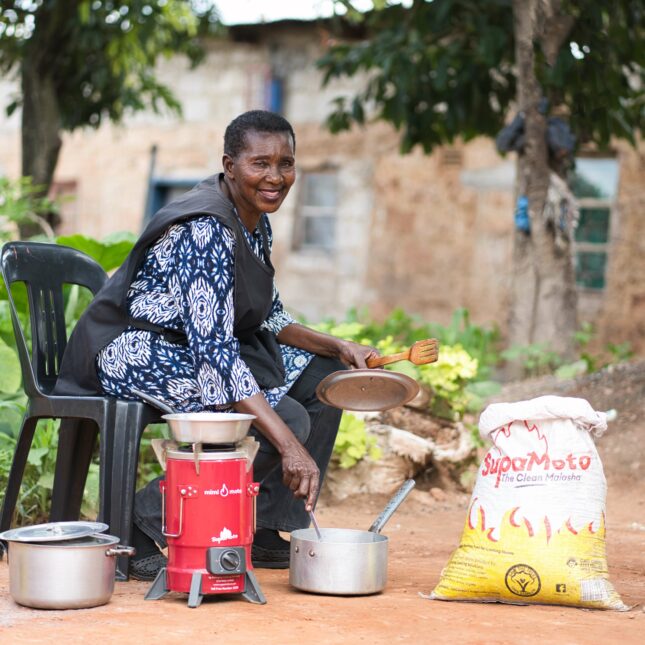
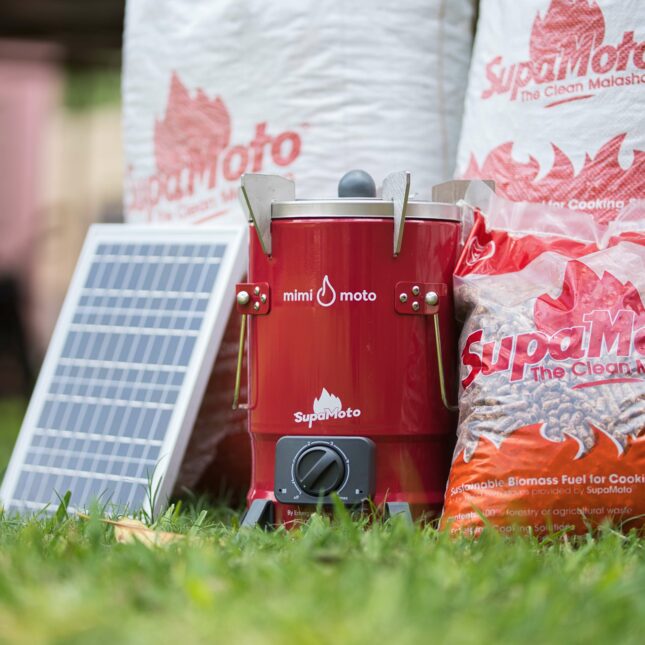
Emerging Cooking Solutions (ECS) began in Zambia in 2013 with an idea that put affordability first and entered the market with the SupaMoto branding. The social enterprise manufactures advanced biomass stoves and a new class of fuel to heat them: pellets made of sawdust from Zambia’s sustainable timber plantations. Formerly a waste product, sawdust is now part of a fuel value chain that is renewable, generates jobs and – in a breakthrough for a homegrown fuel source – costs substantially less than charcoal. The pellets burn efficiently in SupaMoto’s gasifying stoves; in fact, a new design that can be fine-tuned remotely with sensor data broke new ground by achieving the highest efficiency and lowest emissions ever recorded in biomass stove tests at the Aprovecho Research Center.
If the fuel is affordable, the stove distribution model offers an even stronger value proposition. SupaMoto stoves are provided free of charge to households that purchase pellets, with the stoves effectively being loaned out and monitored through an Internet of Things platform. The model is made possible by the strong revenue stream generated from pellet sales at SupaMoto’s 15,000-tonne-per-year pellet factory, which uses a waste product as feedstock. Combined with additional carbon revenues generated under Article 6 of the Paris Agreement, these revenues strengthen the company’s financial viability and bankability.
Our support
However, like many others, this highly energetic enterprise was severely impacted by the COVID-19 crisis. It survived through multiple loans that pushed it into unsustainable debt. In 2022, a senior impact lender came close to issuing a default letter, which would have jeopardised a decade of progress.
The GET.invest Finance Catalyst, which for seven years has provided SupaMoto with strategic advisory services, including financial modelling for a convertible debt raise, fundraising and transaction support, helped the company navigate the crisis and recover beyond expectations. In the financial aftermath of the pandemic, this support expanded into loan restructuring support. The advisors facilitated negotiations with two impact lenders and reviewed the restructuring agreements, securing both debt reductions and longer repayment periods.
Back on track, SupaMoto turned to the GET.invest Finance Catalyst for support with its next growth phase: raising a USD 4.5 million convertible note and developing financing opportunities from the carbon markets. The GET.invest Finance Catalyst supported the structuring of carbon finance proposals, enabling the company to secure pre-financing from a Dutch fund focused on clean cooking solutions.
Alongside its entry into the voluntary carbon market, SupaMoto also initiated the process of participating in the emerging Paris Agreement Article 6.2 carbon market. This mechanism enables internationally transferred mitigation outcomes to be recognised between countries and creates additional pathways for carbon finance. The advisors supported this ambition, as well as the implementation of an innovative blockchain- and digital MRV (measurement, reporting and verification)-based carbon credit programme. This solution has been operational since July 2023 in cooperation with the ixo Foundation and has recently been endorsed by Berkeley.
The plans developed in both Zambia and Malawi for the delivery of Internationally Transferred Mitigation Outcomes (ITMOs), together with a primary buyer in this market, show the potential to raise a total of USD 20 million in pre-finance by 2030. In addition, the advisors engaged GET.invest and the A2EI (Access to Energy Institute) data initiative Prospect, which also played a critical role in piloting the delivery of a real-time, digital MRV-based validation mechanism, triangulating data on the Prospect platform using a data fingerprint approach, thus ensuring ECS’s carbon offsets can be backed by traceable, third party-verified datasets.
The outcome
By the end of 2023, SupaMoto has signed a result-based grant with Nefco, a strategic partner of GET.invest, through the Modern Cooking Facility for Africa Facility. The fundraising activities and financial model developed through the GET.invest Finance Catalyst has also raised approx. USD 4.5 million convertible note by impact investors EDFI and Infraco Africa, as well as an up to EUR 1.2 million loan facility from the crowdlending platform Bettervest and a CHF 500k loan from a Swiss investor.
Building on the initial carbon finance milestone in the voluntary market, in mid-2026 SupaMoto secured a large carbon offtake contract in Zambia with the Swiss Government (managed by the KLIK Foundation). While a similar one is being prepared for activities in Malawi, the company will have the opportunity to scale business in Zambia fuelled by these significant carbon offtake agreements, leading to a need for pre-finance and equity investment of up to EUR 25 million.
The first carbon credit pre-finance deal was small but highly significant, demonstrating the potential of thousands of SupaMoto stoves connected to the Internet of Things and recording millions of cooking sessions. The substantial business growth now underway following the recent equity investment will support the next phase of scaling and further carbon pre-finance opportunities, including the delivery of ITMOs over the coming years.
SupaMoto and ixo have also been producing carbon credits based on near-real-time stove-use data, triangulated, verified and traced through the Prospect platform using blockchain and smart contracts. This represents one of the first implementations of digital MRV, a technology widely seen as a potential future direction for carbon markets. These credits enable more precise and verifiable measurement, as they are linked to actual cooking hours using SupaMoto’s low-emission fuel pellets.
Having come through the crisis, SupaMoto is now operating with secured financing, a proven data-led model and an ambitious growth plan. The company is already evaluating additional renewable fuel pellet sources, such as fast-growing grasses, anticipating the point when sawdust alone will no longer meet demand. SupaMoto highlights that the global carbon mitigation potential of clean cooking represents approximately 2% of global emissions, comparable to the emissions of the entire airline industry. With affordability addressed, the company believes this potential can be realised.
Disclaimer: This story was last updated in August 2026.